Who am I?
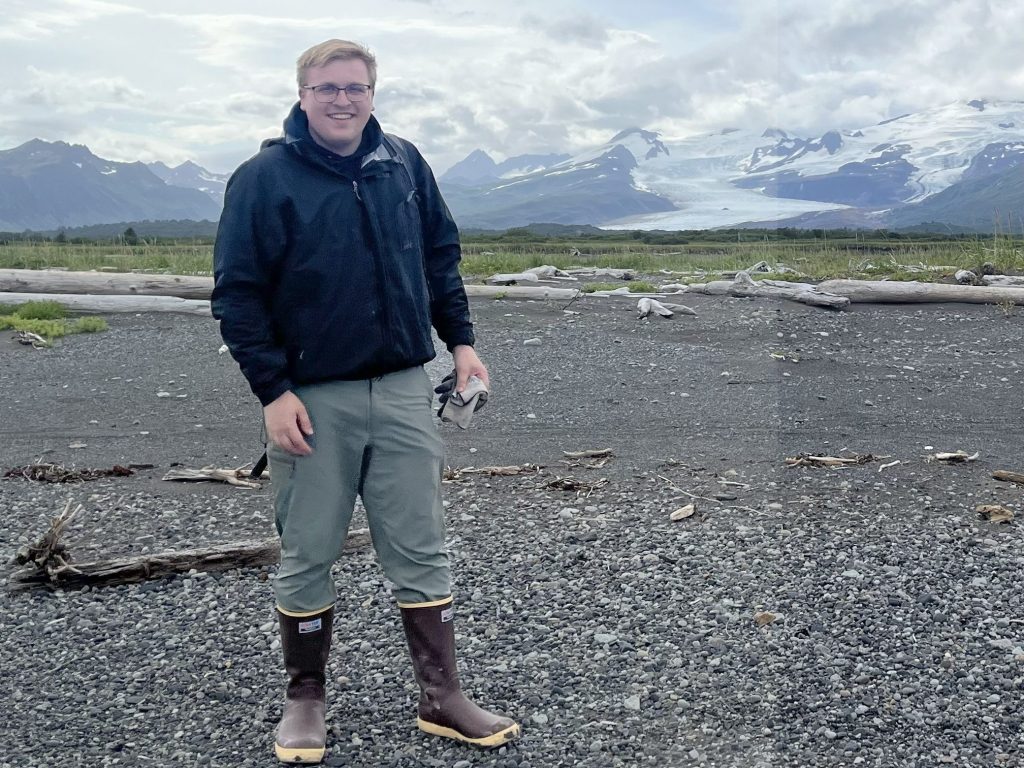
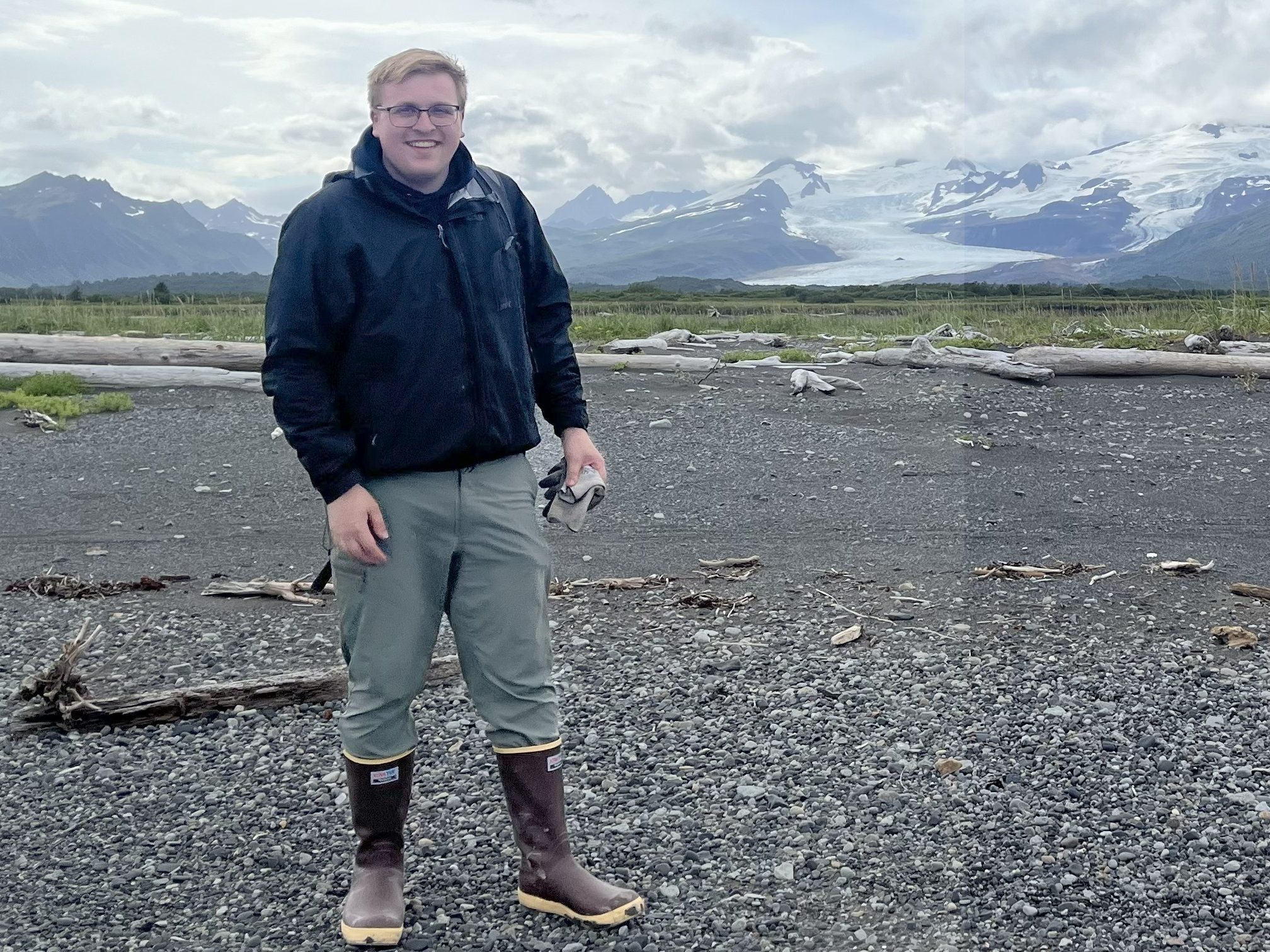
My name is Nick Guy-cow-ski, I was born and raised in Washington state. My go to coffee order, a flat white, otherwise I start my days off right with a London fog (earl grey & steamed milk). I enjoy being outdoors either on a hike or out in the saddle on a bike ride. I’ve sprained an ankle, a couple of fingers and only have broke one bone.
Currently I am a graduate student at the University of Southern Mississippi (I know, nearly as far as I can get from WA state). I started here in the fall of last year, and after completing a year of classes have finally started to get hands on in the lab working on possible solutions to the plastic’s problem. But that’s only where my journey is at now, lets roll it back a few years…
Where it began…
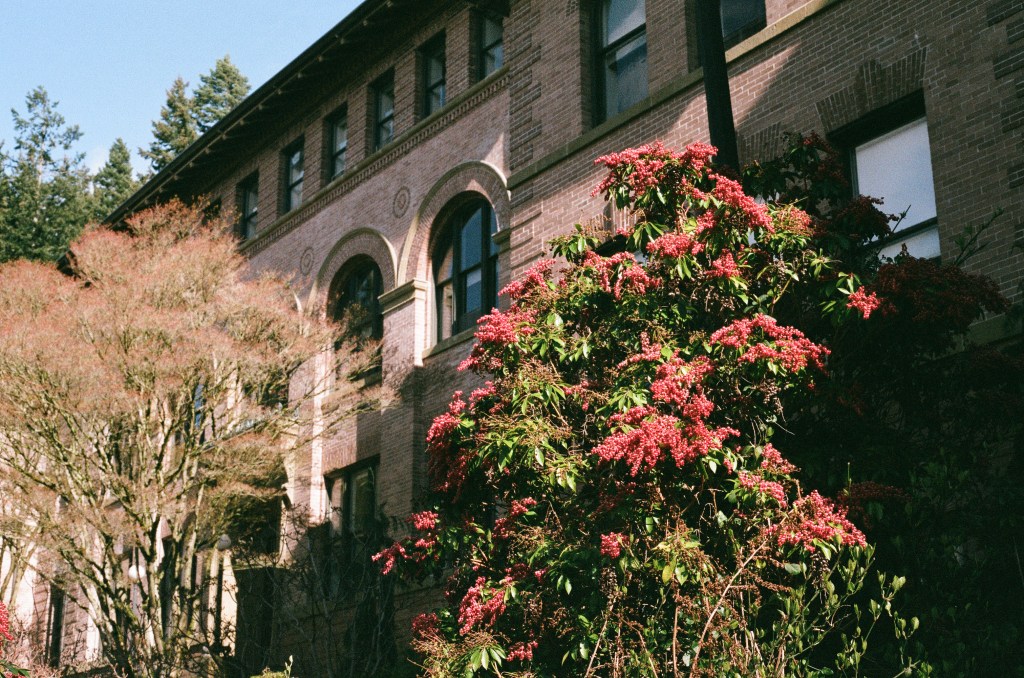
I first started at Western Washington University in the fall of 2019.
Now I would be lying if I said that I had the whole picture figured out right away, and if anyone says they did, they’re lying to you. I started out being really interested in computer science after taking a java coding class in high school. And while I really had enjoyed this in high school, this was not what really clicked with what I wanted from my future career and ambitions. There was also this thought stuck in the back of my mind that I’d always wanted to become an engineer.
At Western there’s only a three choices for engineering, electrical, manufacturing, and polymer materials engineering. Electrical engineering can best be described as the classic electrical circuitry, computer programing, systems design type major. That’s okay but from my prior coding classes I know that this wasn’t my fit. Manufacturing engineering is the closest thing to mechanical engineering at Western, and balances practical skills like machining, part & systems design with the manufacturing environment like automation for production. Now the strange one in the bunch, what the heck is polymer science engineering?
Now this was one of the intrigues for me, I didn’t know what a “polymer” was. But two criteria led to my inevitable choice. The first being a class i took in my second quarter, it was chemistry 101 with professor Ryder. I had not taken much, if not at all, chemistry in high school, and finally I was exposed to it head first. It was at first a struggle, but proved to be a captivating subject. On my first exam I had gotten 100%, and honestly that really surprised me! I’ve never (and am still not) a straight A student, and this really drove me to feel good about a subject. Every lecture I was learning something new and something that explained the world and how things work.
Now the second criteria was one I’d mentioned earlier, I had decided that I wanted to become an engineer. With these in hand I found that the only option at Western was polymer materials engineering. So I worked towards that goal.
Working towards the goal
With a little delay manifesting as the COVID-19 pandemic I continued to progress in my engineering core classes while moving back home and working at Costco. I found the online classes to be very difficult, both due to the lack of hands on in the classroom lecturing but also the monotony of logging into zoom classes and going to work. Those years were hard.
In 2021 I moved back to Bellingham, hoping a change of scenery would help to improve my situation. And it did help but it wasn’t the same as my freshman year. Now near the end of 2021 schools started to open back up and allow in-person classes. This was the break I desperately needed.
Now this perfectly coincided with the next step towards achieving my degree. Soon I would have to be applying for my degree, and historically this has been a competitive process and so I wondered what I could do to be more engaged with the program. I found that there was a chance for “pre-majors” to engage with departmental research. I went and met with my future advisor and mentor, John Misasi, and discussed an opportunity to participate in the Ocean Plastics Recovery (OPR) research project.
What is Ocean Plastics Recovery?
Ocean Plastics Recovery (OPR) is a small group of scientists, fishermen, and community members based out of Kodiak Alaska. These individuals work to clean up the beaches of southern Alaska and rid them of ocean bound plastics. OPR works to bring awareness to the broader community on the impact that ocean plastics can have on the environment, leading clean-ups throughout southern AK and to build connections to companies and universities to utilize collected ocean plastics to then circularize those waste streams

Now I had the chance to help with this great effort. Through the initial research with OPR I learned how plastics are recycled conventionally, through specifically mechanical recycling. I took polyester and nylon nets and worked to size reduce for later reprocessing in injection molded parts. I learned that ocean plastic materials are difficult to recycle, particularly due to the mixed feed-stocks, but also due to the dirt and contamination that these nets and lines collected such algae and seaweed growth, but also the sand and rocks from washing up on shore. I saw that this problem has so many moving parts and I found the opportunity to push that boundary of knowledge for the recovery of ocean plastics to be extremely rewarding.
At the end of this quarter another opportunity arose, still working under my advisor, an internship opened up working for OPR at Western. I applied.
OPR – Summer internship

I got the job! I was hired on to work with OPR trying to understand how to characterize recycled materials and further help progress the adoption of a more circular supply chain. This was my technical dip into polymer science, and in greater scientific field. I learned a lot about material processing, characterization, and the scientific process. I learned so much from this opportunity, but overall I found a desire to learn and to understand.
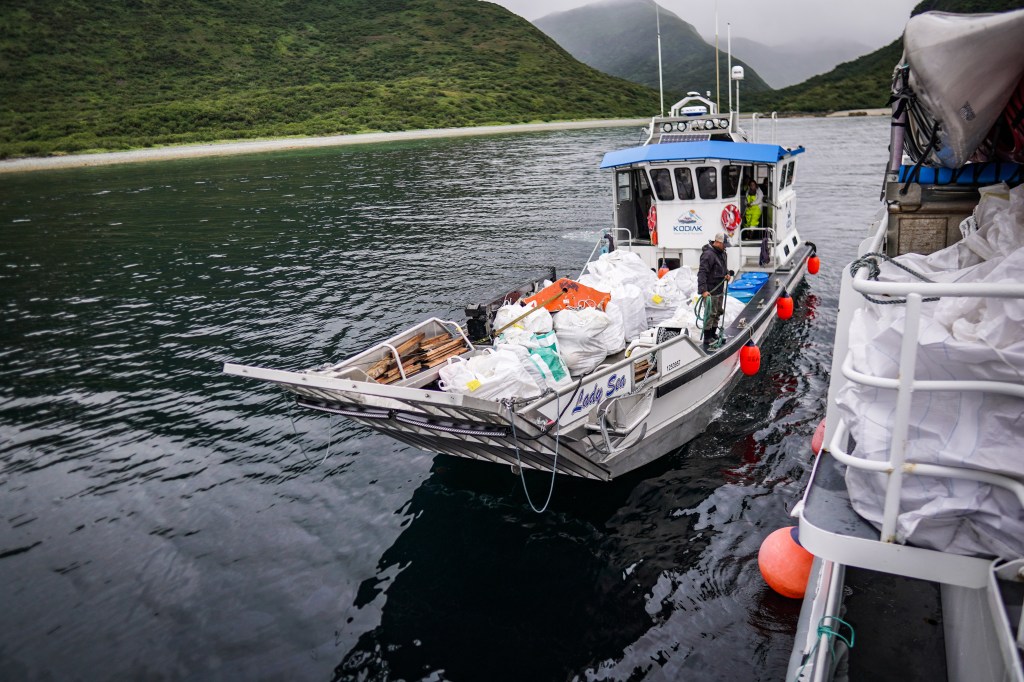
This internship also had another crazy opportunity attached. part of the summer would be spent on the remote shores of Katmai Alaska, collecting plastic nets & lines. I got to cross the Shelikof Strait (while absolutely puking my guts out) and visit the beautiful shores of southeast Alaska on a once in a lifetime trip.
This place was straight out of a National Geographic magazine. I saw my first glacier, my first bear(s), and plenty of astounding views. I waded 200 ft though glacial melt water to the rocky shores of Hallo Bay. While all these places were visually striking, just as striking but repulsively so, was the amount of plastic that was littered on these shores. For context, Katmai has had no long term human settlements on its shores, however over the course of about a week. Myself and our team had collected somewhere around 15,000 lbs of ocean plastic nets & line, bottles, etc.
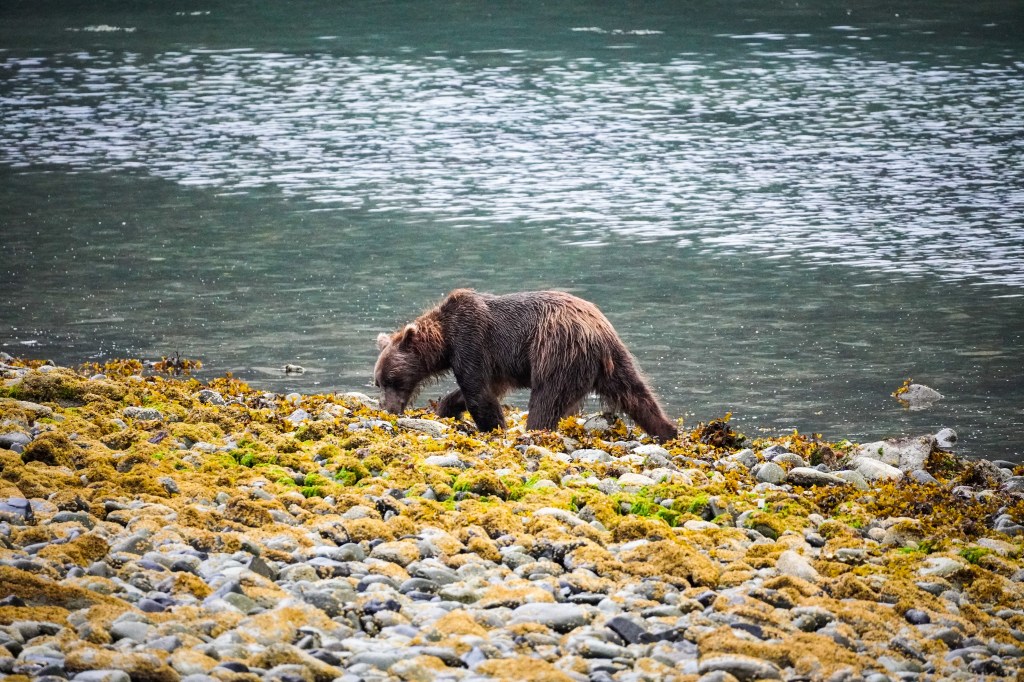
This number was astounding and to extreme contrast between the majestic brown bears fishing for salmon in picturesque creeks with the PET plastic bottle sitting next to them was disgusting. This trip did both inspire me to pursue a career where I can help to be the catalyst for positive change, but also that there are people out there that care just as much as me and are doers.
The rest of my time at Western
I continued to participate in research, moving to start a new project with Boeing. This time taking the interior panels of their retired aircraft and manufacturing their material, whilst proving that these materials can be reuse with minimal impact to the final parts properties. Within the context of these parts we proved that up to 5 times recycled material can be used, equating that to an average aircraft lifespan of 20 years that’s 100 years of aircraft parts supplied by a single reused material.
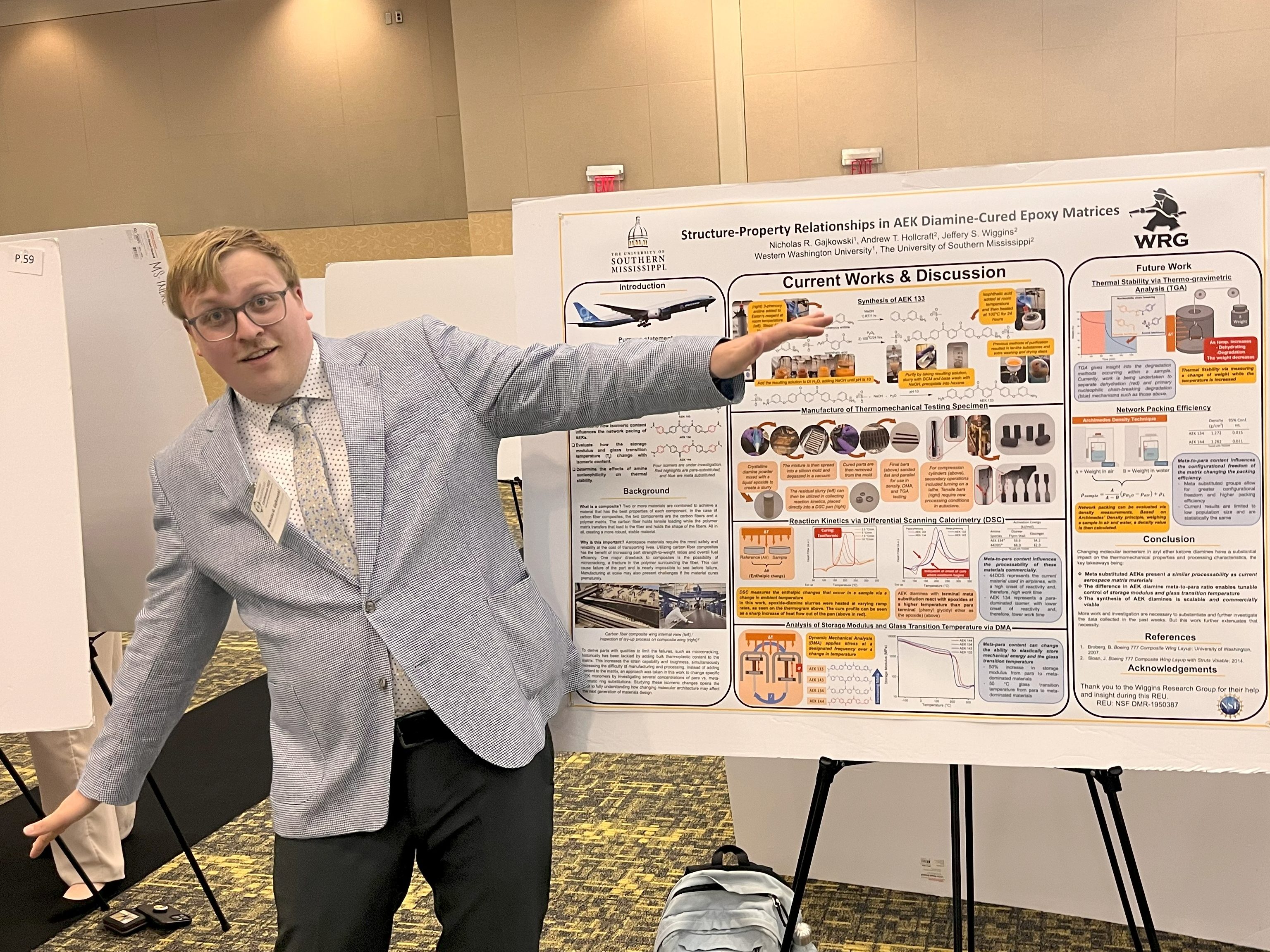
I also spent a summer at the University of Southern Mississippi as a part of the National Science Foundation’s Research Experience for Undergraduates program. There I worked with graduate student Andrew Hollecraft in the Wiggins Research Lab. Here the project was mainly focused on exploring aerospace composites and how a small change like the connection of a few carbons can affect the properties of a material.
What now?
I graduated form Western in the Spring of 2024 with a bachelors in Polymer Materials Engineering, and decided to pursue a higher education. I choose to attend the University of Southern Mississippi for a PhD in polymer science & engineering. I’ve since joined the Qiang Research group working on novel solutions towards up-cycling polymer waste streams through novel methods and processes.
I hope that the future of this page can help discuss and digest larger concepts and ideas in the polymer science field, as well as the broader scientific community.
Thanks for reading, and I hope you find my story interesting.
– Nick


 Nick the Polymer Scientist
Leave a comment